
Nettle Creek Aqueduct on the I&M Canal
Reconstructing History: A new aqueduct for the historic Illinois & Michigan Canal system.
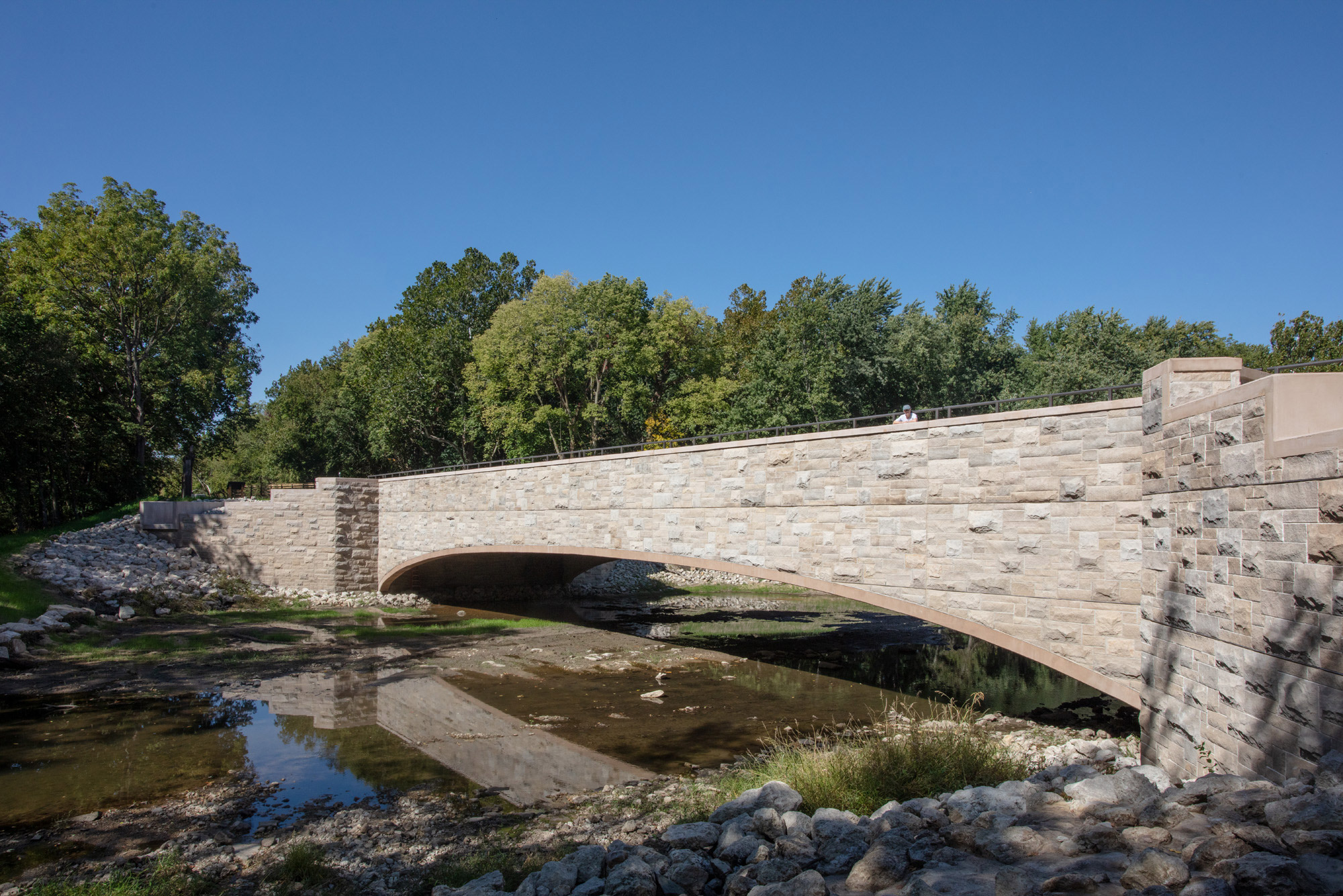
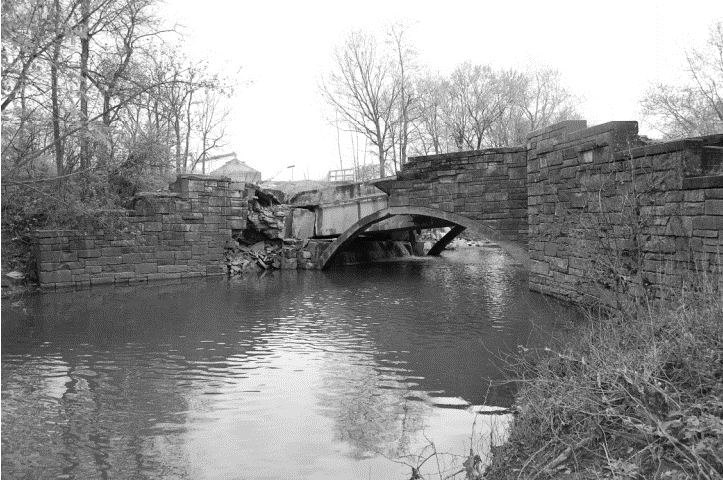
The Nettle Creek Aqueduct is a contributing structure to the Illinois & Michigan (I&M) Canal, a National Historic Landmark listed on the National Register of Historic Places. First constructed in 1847 to carry the I&M Canal over Nettle Creek, the aqueduct was reconstructed at least seven times through 1938 when the Civilian Conservation Corps (CCC) built the last structure at this site. The CCC-era aqueduct collapsed in a flooding event in 2013 and required reconstruction.
JLK is the lead Historic Preservation Architect providing full-service design and construction administration of the aqueduct’s reconstruction. JLK conducted archival research, reviewed historic documentation, carried out field surveys, and prepared a condition assessment prior to initiating design. JLK also led coordination with the State Historic Preservation Office to ensure project conformance with the Secretary of the Interior’s Standards for the Treatment of Historic Properties.
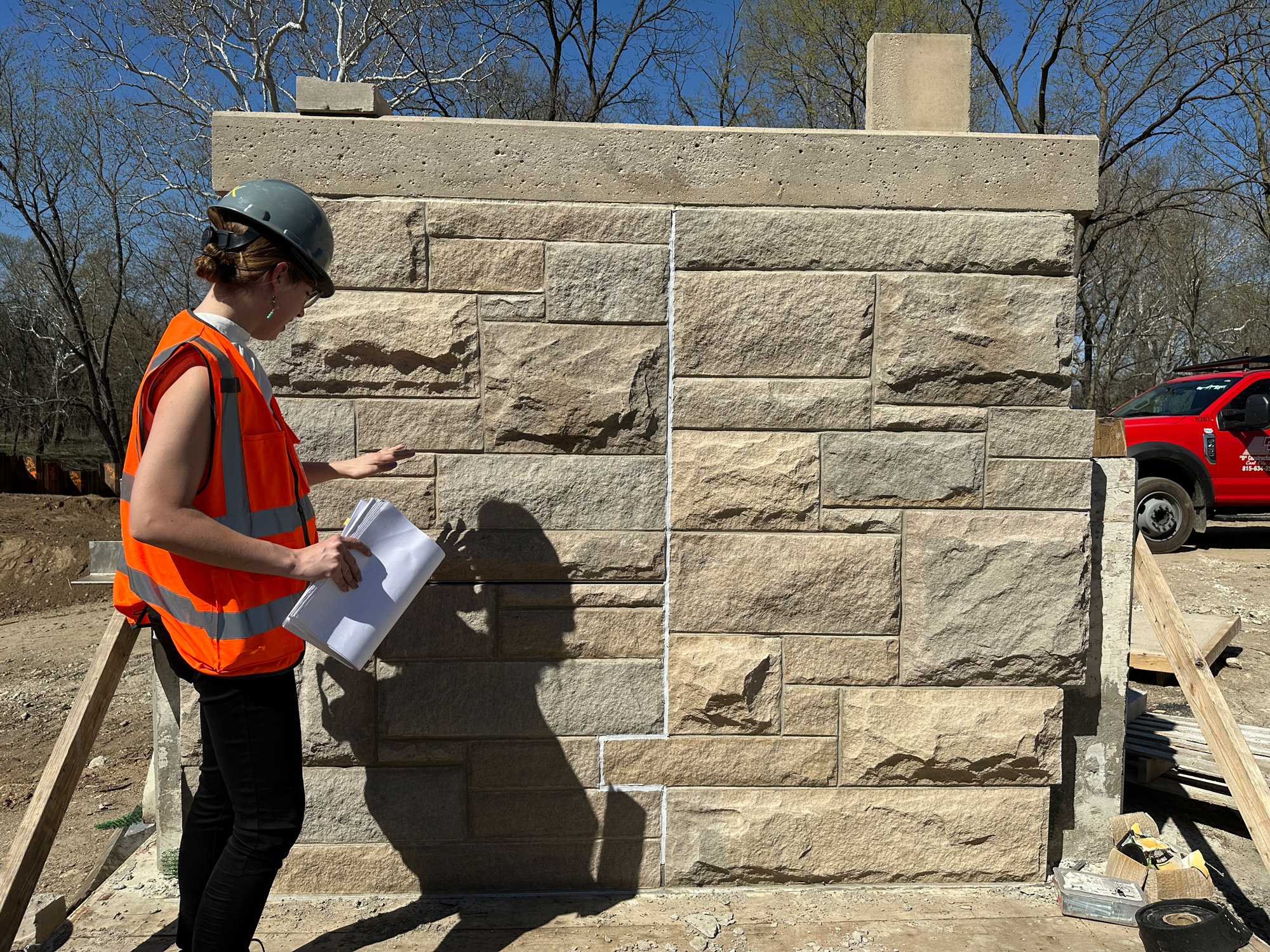
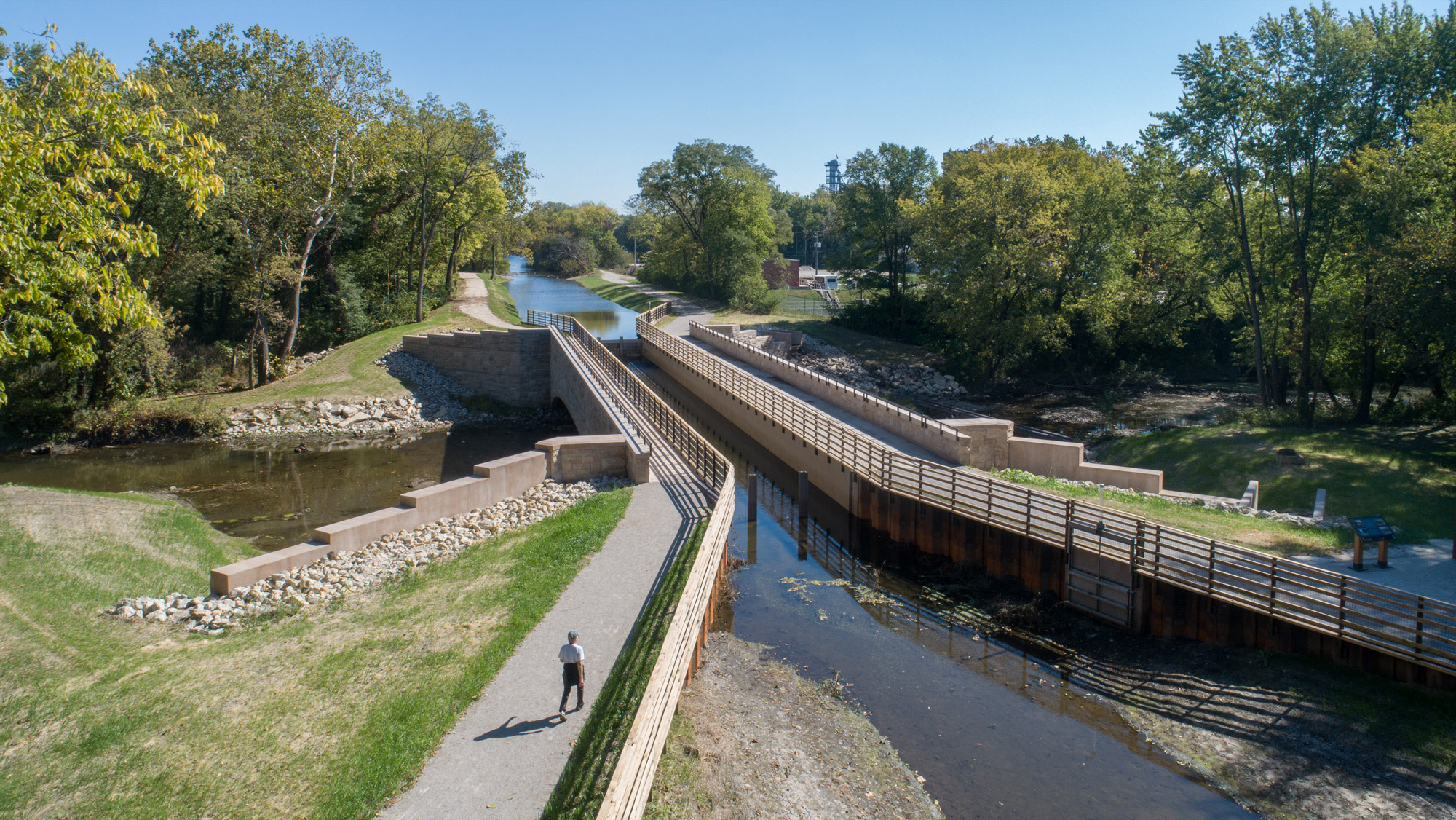
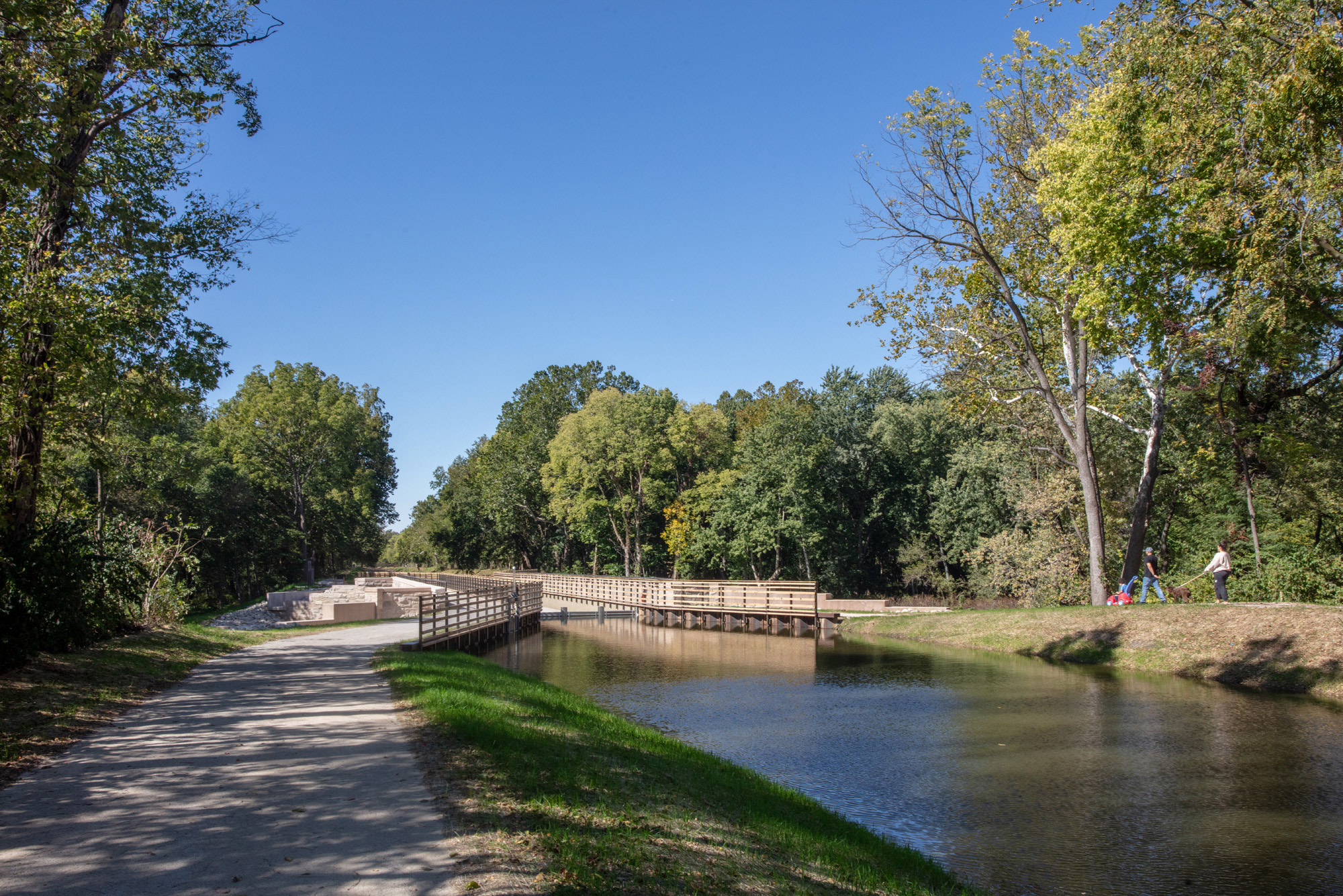
The design emulates the CCC-era structure as it is considered the most historically significant aqueduct at this crossing. The structure was widened for hydrualic functionality, but the characteristics representative of the CCC-era design were retained including the single-arch span and masonry veneer with concrete coping. Remnants of the pre-1938 abutments were recreated through use of regular-coursed veneer in select areas.
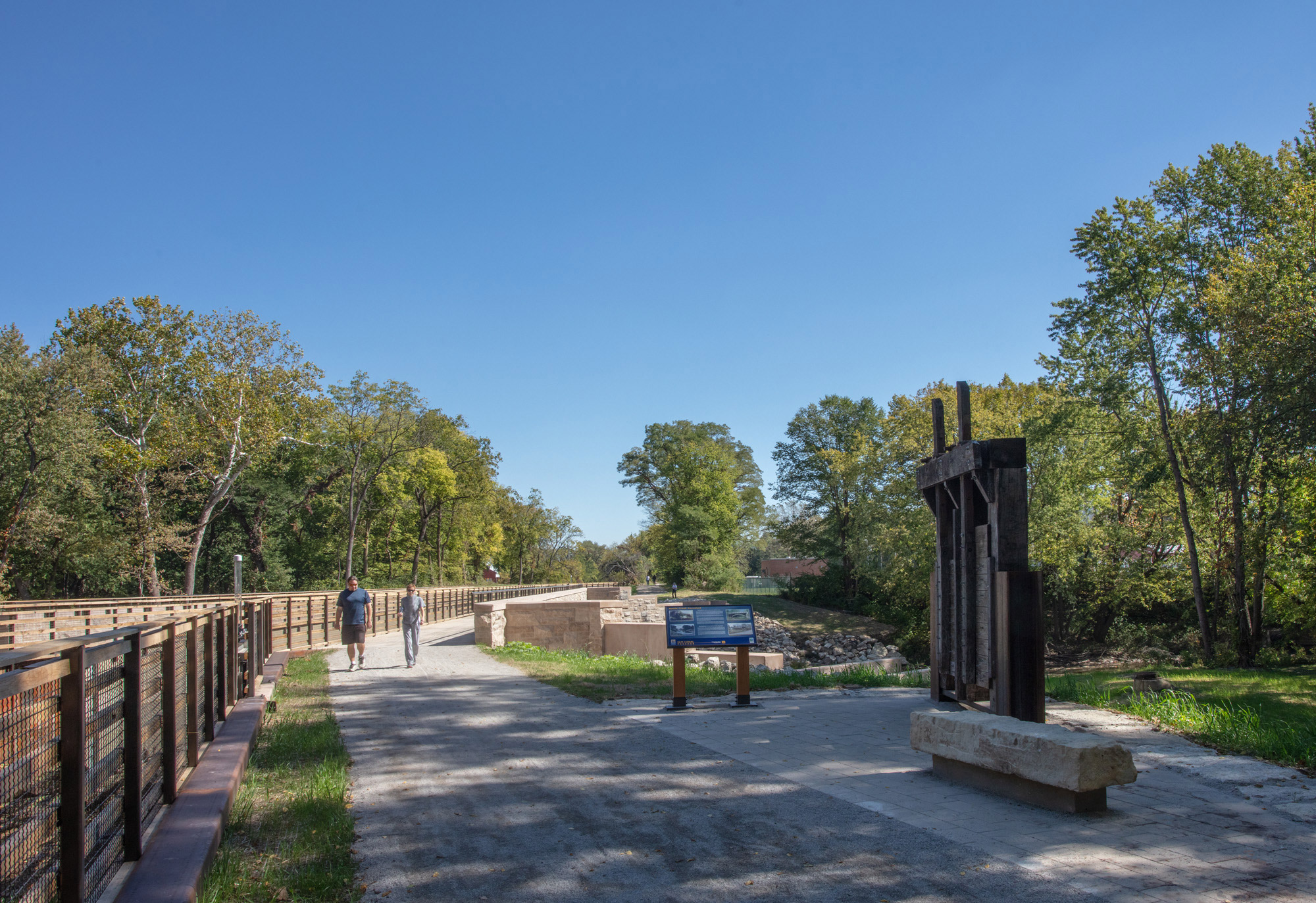
JLK also designed interpretive signage and coordinated display of the wood and iron sluice (or waste) gate, which historically regulated water inside the canal, and limestone blocks along the newly incorporated walking/running pathways.
The I&M Canal connected Lake Michigan to the Mississippi River via the Illinois River and played a key part in the development of Northern Illinois. As the I&M Canal encountered larger tributaries, aqueducts were engineered and constructed to carry the canal system over these waterways. The Nettle Creek Aqueduct is one of five aqueducts that carried the I&M Canal over such waterways along its route. Seven major reconstructions of the Nettle Creek Aqueduct ocurred between 1847 and 1938. The Civilian Conservation Corps (CCC) designed and constructed the last structure which collapsed in a monumental flooding event in 2013.
The Nettle Creek Aqueduct is a contributing structure to the I&M Canal system. The I&M Canal was designated a National Historic Landmark in 1964 and subsequently listed in the National Register of Historic Places in 1966.
The Nettle Creek Aqueduct is a contributing structure to the Illinois & Michigan (I&M) Canal, a National Historic Landmark listed on the National Register of Historic Places. First constructed in 1847 to carry the I&M Canal over Nettle Creek, the aqueduct was reconstructed at least seven times through 1938 when the Civilian Conservation Corps (CCC) built the last structure at this site. The CCC-era aqueduct collapsed in a flooding event in 2013 and required reconstruction.
JLK is the lead Historic Preservation Architect providing full-service design and construction administration of the aqueduct’s reconstruction. JLK conducted archival research, reviewed historic documentation, carried out field surveys, and prepared a condition assessment prior to initiating design. JLK also led coordination with the State Historic Preservation Office to ensure project conformance with the Secretary of the Interior’s Standards for the Treatment of Historic Properties.
The design emulates the CCC-era structure as it is considered the most historically significant aqueduct at this crossing. The structure was widened for hydrualic functionality, but the characteristics representative of the CCC-era design were retained including the single-arch span and masonry veneer with concrete coping. Remnants of the pre-1938 abutments were recreated through use of regular-coursed veneer in select areas.
JLK also designed interpretive signage and coordinated display of the wood and iron sluice (or waste) gate, which historically regulated water inside the canal, and limestone blocks along the newly incorporated walking/running pathways.
The I&M Canal connected Lake Michigan to the Mississippi River via the Illinois River and played a key part in the development of Northern Illinois. As the I&M Canal encountered larger tributaries, aqueducts were engineered and constructed to carry the canal system over these waterways. The Nettle Creek Aqueduct is one of five aqueducts that carried the I&M Canal over such waterways along its route. Seven major reconstructions of the Nettle Creek Aqueduct ocurred between 1847 and 1938. The Civilian Conservation Corps (CCC) designed and constructed the last structure which collapsed in a monumental flooding event in 2013.
The Nettle Creek Aqueduct is a contributing structure to the I&M Canal system. The I&M Canal was designated a National Historic Landmark in 1964 and subsequently listed in the National Register of Historic Places in 1966.
Reconstructing historic infrastructure that meets contemporary requirements will be an on-going challenge as our climate continues to change.